As a busy aircrew member your health is in your hands. And when you find yourself reaching for multiple snacks per day, it’s not an issue of binge eating or self control. It is likely hunger!
When you start reaching for a snack, ask yourself when was the last meal you had? Was the meal ample in protein, carbohydrates and fats and calories to keep you full long enough?
Today let’s conquer the question, do you need snacks at all?
I get the question all the time, how can I make healthier choices when it comes to snacks? This is a really common struggle – please know that you’re not alone.
One of the best ways to develop healthy habits and long term health is to provide nutritious food.
In this post, I will discuss 5 ways that you can improve your snacking habits so that you will get the nutrition your body needs while still enjoying snacks!
Do you need snacks?
Yes!
The average body needs snacks in order to maintain healthy energy levels and to get the nutrients the body needs. In general, I recommend having three meals and two to three snacks daily.
You probably ask why is snacking important? Oftentimes, your schedule is so busy that you may not get an evenly timed meal. Example: you have an early report time and skip breakfast. You plan to get lunch at the airport and the line is too long. Dinner at the overnight hotel gets delayed due to city traffic or a maintenance issue on your last flight.
This is where snacks are important! If you go too long (more than 6 hours) between meals, your blood sugar may take a plunge, causing fatigue and impaired decision making ability. In addition, if you’re already suffering from high blood pressure, stress from no food will make your blood pressure rise too. When you have evenly timed snacks in between meals, you can maintain good cognitive performance and stable blood sugar and blood pressure!
However, not all snacks are created equal. Many snacks that seem healthy, aren’t offering quite as much nutrition as you’d guess.
In addition, many snacks are high in added sugar and other nutrients that are not nourishing your best health. That’s why it is important for you to cultivate healthy habits, even at snack time.
What does “healthy” mean?
There are many healthy snacks that you can enjoy, but it’s important to know what healthy means. Healthy snacks can mean different things. I prefer that you focus on snacks that are low in added sugar and rich in vitamins, minerals, and fiber, most of the time.
It is also important to cultivate these healthy snacking habits now so that the habits can be sustained over your lifetime and career. And if you have kids, you can teach them about healthy snacking, too!
With these five tips, you’ll have no problem fine tuning your healthier snacking habits!
Tip 1: Pair Two Foods
For optimal nutrition and satisfaction, I recommend that you enjoy different food groups when snacking. Not only does this give you the opportunity to make a more satisfying snack, but it also gives your body the ability to stabilize blood sugar throughout the day.
Some healthy food pairings are:
- Freeze-dried strawberries and dry cereal
- Crunchy chickpeas and a cheese stick
- Carrots and tortilla chips dipped into a guacamole cup
- Single serving popcorn bag with dried blueberries
- Single serving trail mix with a mini granola bar
- Squeeze fruit packet with a yogurt cup
Eating more than one food item also helps keep your belly full until you can get a real meal. Keep the pressure off and just lean in to fueling your body for your own future!
If you are usually having processed and packaged snacks that you’d like to get away from, make a goal to choose a new food with the packaged snack and before you know it, you’ll have revamped your snacking into more healthy options!
Tip 2: Vary Intake
It takes anyone a while to get used to something that feels new. And for busy airline professionals it can be uncomfortable and overwhelming! There are so many messages in the media and so many choices at the grocery store.
Think about carrots. Baby carrots are one way to enjoy a snack but there are other options, too!
You can have baby carrots in their natural form right out of the bag,shredded baby carrots mixed into some hummus, or roasted cold carrots paired with some olives or pickles for a different flavor.
Each time you have a chance, challenge yourself to change up the taste and texture of your snacks. You will build confidence in preparing for your trips and eventually you’ll be making up your own new methods!
Tip 3: Keep the Portions Small
Snack time is a great opportunity to learn portion control because your body doesn’t need much fuel if your next meal is right around the corner. My rule of thumb is a snack should always be less than 500 calories, with 200-300 calories per snack being about the average calorie intake I teach my clients.
I also teach the concept of not eating out of large packages. You know how it happens at home. Sitting in front of the TV, phone in hand, munching away from a package. And you come to the bottom of the bag and wonder…did I really eat ALL that?
When snacking in all environments, I recommend pre planned portion sizes. Use a cute container or bowl. If you’re on the flight deck, grab a disposable cup or napkin. Use your closed fist as a portion guide for how much of the snack to have (if you’re pouring trail mix from the big bag you brought from home.) Snacking always has had a negative connotation because most people get carried away with portion sizes. When portions are controlled, snacking can be a GREAT thing.
One of my favorite ways to eat a snack is to package it in a snack size zip bag or palm size sealable container.
Tip 4: Compare
You know what’s fun and lower pressure when grocery shopping? Exploring new foods!
Instead of forcing your usual habits of what I call the “apple, banana, carrot” diet or relying on protein bars and shakes for snacks, venture to the grocery store and seek out new foods for snacks! This can be a fun exercise and will get you excited about meal prepping for your future trips.
Try buying a few different varieties of snacks you’ve never tried before. This past week, I’ll show you some of the new items I found.
Another example is to buy four or five different kinds of fruits. Right now in my kitchen I have: blueberries, dried orange slices (Trader Joe’s), kiwis, and clementines. Having a variety of fruits and vegetables also keeps you excited and wanting to grab for them!
Tip 5: Involve Your Family
The more that you’re able to offer your family the opportunity to be involved, the better. For example, if you’re shopping for healthy snacks at the grocery store, ask your partner or child to make two snacks they want to try this week.
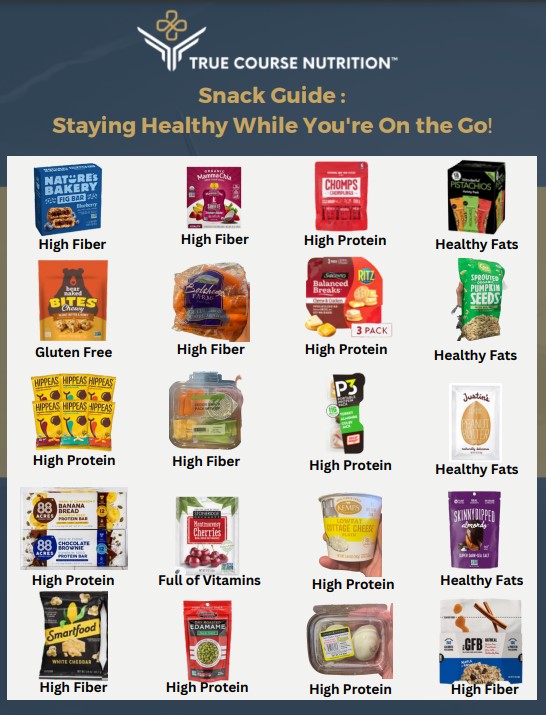
Favorite snack guides
Click the image to download the snack guide.Untitled design (1)

A word from Jill
Being an aircrew professional in an environment where you don’t readily have access to food is very difficult. By using these tips, you will learn how to conquer snacktime with proven strategies to reach your health goals to sustain long term health.even at snack time!
I can’t wait to show you how!
Download this handout as a guide on how to read labels and choose healthy snacks. Then, when you find and purchase a new favorite, send me a picture over on Instagram @pilot.nutritionist